Sunday, March 18, 2012

The Talisman of Mercury


Mercury was considered to be the third of the seven fabled planets of the ancients. The influence of Mercury is said to enliven the brain, the nervous system and breathing.

This talisman consists of the third and fourth pentacles of Mercury which are said to:

Invoke all spirits subject to Mercury.
Acquire understanding and knowledge of all things.
Aid in finding and penetrating hidden treasures.
Give a fine memory, skill in writing, artistic and scientific ability.
Enhance psychic communication.
Convey personal magnetism.
Help gain the impossible.
Bring success in business.
Make one eloquent.
Open all doors to secret knowledge.
Cause all wishes to be granted.
Inspire writers and remove writer's block.
The one talisman for writer's, poets or artists.

The priests, rabbis, and mystics of the ancient world believed that the "planets" had immense powers over the emotions, character, and physical attributes of mankind as well as the spirit world.

The Ancients knew of seven "planets": the Sun, the Moon, Mercury, Venus, Mars, Jupiter, and Saturn. They believed that these magical symbols channeled the powers of the planets and then commanded the spirits of each planet to obey.

Sorry I haven't posted for so long. I had some serious health issues to work on.

By the Old Ways,
Dusio

Friday, March 16, 2012

The wearin' of the.... RED!!!

How did I neglect to post about The Liberalia last year! :-o I suppose, like everyone else, my vision was clouded by the Irish celebration and the implications of a "saint" feast substituting for an older Pagan celebration. Point is: Everyone was gettin' drunk at this time of year!

What's the Liberalia? Just after the Ides of March (a whole other post) was the celebration of Pater Liber and Liberia. It was a state festival AND a personal feast AND considered a rustic festival as well, or a farmer's holy day of obligation. Liber and Liberalia are protectors of the seed, which has just been planted.

On the personal or family level, this is the Italian Bar Mitzvah! When Boys became Men (Girls became Women at menarche)! Boys would take the talisman they'd wear for protection from The Eye (the bulla) along with their boyhood clothes- the toga praetexta, and burn them in offering to The Lare. The boys would get their "Toga Virilis" and be officially welcomed into the company of men. No wonder there was so much drinking! I bet they'd drink the newly minted men under the table. No doubt there was also the visit to the sacred prostitutes and an "initiation into the art of love." Nice way of saying they got the new men drunk and lost their virginity. Stories are told about how Mothers would keep the son's bulla and not let it burn so their son would be protected through their life.

With all the talk of seed protection and drunkenness, it's hard to not think of Ceres, Proserpine and Bacchus. It was hard for the ancients too: There was a temple dedicated to this triad with Liber and Liberia being likened to/syncretized/identified with Bacchus and Proserpine.

This celebration had its high class elements and its low class elements. Liber and Libera were deities of freedom and therefore of slaves. Their fest was a way of letting off steam. Quoth the holy wiki"

Liber's festivals are timed to the springtime awakening and renewal of fertility in the agricultural cycle. In Rome, his annual Liberalia public festival was held on March 17. A portable shrine was carried through Rome's neighbourhoods (vici); Liber's aged, ivy-crowned priestesses offered honey cakes for sale, and offered sacrifice on behalf of those who bought them – the discovery of honey was credited to Liber-Bacchus. Embedded within Liberalia, more or less at a ritualistic level, were the various freedoms and rights attached to Roman ideas of virility as a divine and natural force.[2] Young men celebrated their coming of age; they cut off and dedicated their first beards to their household Lares and if citizens, wore their first toga virilis, the "manly" toga – which Ovid, perhaps by way of poetic etymology, calls a toga libera (Liber's toga or "toga of freedom"). These new citizens registered their citizenship at the forum and were then free to vote, to leave their father's domus (household), choose a marriage partner and, thanks to Liber's endowment of virility, father their own children.

Liber is credited with the invention of honey, which ties into the Bacchic and Dionysian lore. There was a LOT of overlap, including Liber being credited with protecting the grape. However, even in ancient days, Liber and Bacchus were seen as very distinct entities. In fact, Bacchinals were outlawed. Likely because of their Siclian/Southern Italian origins and the repression of the lower classes by the 1% (the more things change, huh?)

The same way celtic based wicca eclipses every tradition out there (it's been called the loud neon light of paganism), I'm tired of every Irish holiday eclipsing the Italian ones. I remember the stories about how the Irish immigrants lived on one side of the street and the Italian immigrants on the other side and there was constant fighting. Literal fisticuffs. Kids getting jumped on the way to/from school It was Jets n Sharks time and the cops didn't care because who cares when the rabble fight amongst themselves?

Italians wear Red on this festival day for many reasons, not the least of which being to piss off their Irish neighbors! Red is, of course for Rome, protection against The Eye (which Pater Liber was- He was the horn which warded off evil! That's one reason why the phallus processed through the town). Red is also the different color in the Irish and Italian flags. Orange was worn, allegedly, by those protesting the church- the rebellious Irish. Red was worn by the Italians as an FU ;) (Also, St Joseph's day is March 19th and red is worn on his day too!). The Green/White/Red stripe flag of Italy wasn't adopted officially until after WW2 so it was likely an early start to the Italian feast of St. Joseph, but who knows- a lot of these clashes were happening in the 40s and 50s- The Irish showed up and settled, then waves of Italians came so the Irish were no longer low man on the ladder and picked on the Italians until new waves of immigrants arrived from other lands.

So when I wear red tomorrow, know that I'm flippin all of you the bird and taking back this drunken celebration of Spring for Italia! ;) And I'm still gonna make zeppoles on the 19th! Ha!

PS: Patrick was Roman :P Haha!

Tuesday, March 13, 2012

Dancin the night away

Actually, I've been dancing the week away!

Last Thursday I taught a Tarantella class at the Sacred Space conference in MD. After my class, I went to a trance-prophecy dance where Lakshmi was very present with me. On Friday, I went to a conjure dance and thankfully stopped myself before I was taken. On Saturday, I danced with Alessandra Belloni at her show in NYC. On Sunday I took a drum and dance class with her. On Monday I picked up my new castanets and spent a few hours breaking them in while dancing and teaching kiddo how to use them and the steps to the dance.

I'm taking today off from dancing!

Tomorrow I'll post the outline from the class along with a reading and reference list.

Here is a bit of what I've been doing with the castanets:

Tuesday, March 6, 2012

Origin Peeve!

I'm always reading and researching ancient Italia and Sikelia, even when I'm not boning up for a class or a presentation. Lately, however, I've been turning my attention specifically toward Tarantella, the difference between southern/Sicilian and northern styles, and it's origins, before the cult of Dionysos.

So many sources which discuss Tarantella in Italy claim that because Italy was part of Magna Graecia, the Greeks must have brought this practice, as well as their pantheon and any and all magic to Italy. 

BULLSHIT!

I'm not denying influence and exchange and cross-over, but this is like saying the Pilgrims brought corn to the Americas and taught the Native Americans how to cultivate and use it! Eventually, the religion of the colonists was adopted, but it doesn't mean the folk practices were ever forgotten or discontinued.

Colonists are as changed by the Natives as the Natives are by the colonists. In this case, the Sikels and Sicels and Elmyans were already there when the Greeks showed up. Enna was already a site of Mother/Daughter Goddess worship way before the Greeks ever set foot on Her shores. So why aren't the ancient Sicilians given credit for doing the influencing?

It's lazy research and lazy writing to assume that because two groups touched, the group we know more about are the ones who did the influencing instead of the ones who were influenced. The Greeks are still around (tho it's lazy to assume there's one homogeneous group) while the Etruscans are not. Actually, it would be a better comparison to say the Etruscans were absorbed into larger Roman, and later, Italian culture while the Spartans were absorbed into the larger Athenean and later Greek culture. We don't know which traditions specifically came from where.

The Romans had a few of their own rites and customs but they learned from the Etruscans and the Sabines. This is documented by the ancient writers (judge the veracity as you will). No one is claiming the Greeks came along and taught the Etruscans how to consecrate a city or the art of Augury.

So why are we talking about the Greeks inventing Tarantella? Sacred dance existed before Athens, before Attica. Sacred dance was used by the Sicilians, the Egyptians, the Babylonians the Israelites and the Sumerians too. Every group has their sacred movement. Again, Native Americans had their sacred movement and no one is saying that the Pilgrims taught them how to do it.

I think my head of steam has run its course. As always, I love to hear the opinions of others and get new insight and perspectives.

Sunday, February 26, 2012

Carnevale Morto!

Sorry I missed posting for Carnevale last week, but I was actually off celebrating it!

One branch of my Family is from Montemarano, where Carnevale still lives, or in this case, where it also dies. When "lent" comes around and Catholics are pledging to do without, those in Montemarano keep to the old ways. The Sunday after Ash Wednesday (which we've already discussed as an ancient pre-christian ritual), we find the people of Montemarano still partying! Drinking! Obscenities! Drinking! Tawdry jokes! Drinking! Commedia! Drinking! Dancing! Drinking!

The effigy of the King of Carnevale is given a funeral. Men dressed as butchers read the King's Last will and testament where different parts, such as the brain, the heart, the guts, etc, are given to different people in the community. There's local and political satire involved as well. This isn't a kids show ;)


The effigy is processed through the streets in a coffin (with his huge phallus sticking up high above the box). Following the coffin are men in drag playing the parts of the King's wife, mother, sisters, mother in-law, aunts, and so on. They comically mourn, weep, lament and wail (with lots of profanity thrown in). There are two versions, one for the kids, one for the adults.

The effigy is set on fire, symbolizing the sacrificed King returning to the land. Everyone then eats, drinks and parties! And dances!


Oh, the dancing! Lead by Pulcinella, we follow the King, through ecstatic dancing, on his journey down into the underworld and back up again.

So what's been happening since the last big festival?

Saturnalia, dark of winter, Parentalia, Carnevale, Ash Wednesday, then... March!

The ashes not only remind us of mortality, they also connect us to the earth which is about to be worked. Mars, for whom March was named, is a God of Fertility, a son born of Virgin Goddess, Hera. The period known as "lent" is when we're cleaning up the land from the Winter and preparing for the planting season. Mars will soon be petitioned by his priests, the Salii via dance after the seed has been sewn. Before that, however, we have the old season which must be cleared up and extinguished. As we begin to work the thawing land, we have the Winter King descend, to later rise up as the Solar King in the plant to be sacrificed when reaped and consumed, then reborn again... and so on.

That's what we do today. Farewell, Carnevale! Time to get to work!


Monday, February 13, 2012

Parentalia!

I posted about this holiday last year and I thought I'd pretty much summed it up nicely, so here is a recap with more below:

This is a festival for honoring one's dead parents. Families gathered among the tombs of loved ones and made offerings or sacrifices of grain and wine to their souls. The Parentalia was the first of three festivals in February for appeasing the dead which started on the Ides and lasted until the 22nd. It typically fell on February 13 or 15, and was followed by the Feralia and Caristia. During this time all temples were closed, marriages were forbidden, and public officials suspended business for the duration of the festivals.

There were a few things mentioned in there, all of them having to do with Family. Parentalia: Honoring of Parents who have crossed over. Feralia: Honor spirits of the dead in general, including the restless dead who need to be driven out of a home or tricked out. The Caristia was a time to honor your family, like a family reunion. So there it is: Departed parents, all souls, living family.

Notice that the time to honor and gather with family comes right around the time the weather is once again good enough to travel. This was likely the first time extended family got together since the winter holidays.

Lupercalia has nothing really to do with this, it happens to fall during this time. In the original post, I spoke of retconing it, but it's less of a retcon and more Rome-specific whereas the Parentalia was celebrated by the Etruscans and predates Rome.


More from Nova Roma:
The Parentalia is the Roman festival for honoring one's dead parents. Families gathered amongst the tombs of loved ones and made offerings or sacrifices of grain and wine to their souls. Although the Parentalia always began with the performance of ceremonies in honor of dead parents by a Vestal Virgin, Romans basically celebrated the Parentalia at the family level. Families walked outside the city to visit the family tombs and performed private sacrifices in honor of dead kin (especially parents). The sacrifices were simple, a little wine, a little corn or bread, perhaps some votive garlands. It was a quiet, personal, reflective day, followed by a quiet reflective week or so to think about loved ones and the importance of the family.
The long name for this festival is the Parentalia Novindalia. the nine days feast. It went from the 13th through the 21st. Nine days, as I've said before, is important. Nine is the number of Mars and action. During this week I will be working a novena in memory of my family. 

It's time to clean (or start!) your ancestor altar. It's time to visit the graves of loved ones in person, if possible, in thought otherwise. Whatever offerings you would bring to the grave, bring to a crossroad if you can't go to the site. And have some fun with your loved ones this week!

Wednesday, February 1, 2012

You call it Imbolc. We call it Februarius.

There are so many feasts and festivals upcoming and ongoing depending on the region, especially from pre-Roman times. Today we celebrate the return of Proserpine, or Kore to Her Mother and the upper world. To this day Catholics celebrate by lighting candles to the Queen of Heaven and blessing the candles. Celts celebrate Brigid/Imbolc. The Norse celebrate Freya.

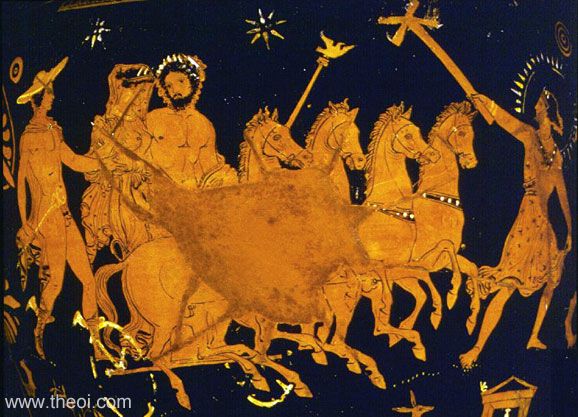
Return of Persephone, with Hades, Hermes & Hecate | Greek vase, Apulian red figure krater
The Return of Persephone
February is named for Februus, a possible Etruscan deity of purification and of the underworld. Perhaps an epithet of or akin to Pluto? I've seen the names Februa and Februatio in my studies as possible Sabine deities. Are they a Sabine divine pair who jointly ascend? The picture above shows Proserpine being returned to the upper world b Pluto and flanked by Hermes and Hecate.

This is the month of purification, of spring cleaning in preparation for the new year. Soon I'll be posting about the Parentalia (the origin of many hallow's eve traditions), Lupercalia and the origins of love day (my annual whip my Roman Sex Gods re-post with additional info!), Februalia, and the Feralia, celebrating the underworld deities (see what I mean about Februa and Februato?).

Whatever name you call this turn of the wheel, I hope you have a happy one!